
Abstract
Objective
This study examined the effects of the occupational health and safety (OHS) Law No. 6331, enacted in Türkiye in 2013. It analyzed the rates of work-related accidents (WrAs), occupational diseases (ODs), and work-related mortalities (WrMs) among compulsory insured workers from 2007 to 2023. Additionally, it aimed to reveal the situation prior to the introduction of compulsory OHS services for public institutions and low-risk workplaces with fewer than 50 workers in 2025.
Methods
Using data from Türkiye’s Social Security Institution (SSI), trends across 81 cities were examined through an epidemiological, observational, and descriptive design. Indirect standardization was applied to adjust for variations in the number of “4-1/a compulsory insured” workers, allowing for comparisons of standardized (s) WrA, sOD, and sWrM ratios between cities.
Results
The number of insured workers in Türkiye nearly doubled during the study period. Regional disparities became evident, with sWrA ratios higher in western provinces and sWrM ratios elevated in the east. Zonguldak, Bilecik, Kütahya, Manisa, Bartın, Karabük, and Kocaeli consistently showed the highest standardized ratios. After the law’s implementation, sWrA rose in the Black Sea region, while a modest rise in sOD was detected in Marmara. Peaks in sWrM occurred in various cities, with clustering observed in the Eastern Black Sea.
Conclusion
This study highlights systemic weaknesses and regional inequalities in Türkiye’s OHS landscape. The upcoming 2025 expansion of Law No. 6331 provides an opportunity for improvement; however, persistent underreporting, limited diagnostic capacity for occupational diseases, and uneven implementation across regions suggest that significant structural gaps remain.
Keywords: Work-related accident, occupational disease, work-related mortality, occupational health and safety, OHS, Türkiye, city, province, region, standardization, 6331
INTRODUCTION
In Türkiye’s recent history, significant reforms in occupational health and safety (OHS) have been initiated, initially the social security reform of 2006. This reform unified previously separate social security institutions (SSI), including those for self-employed individuals and civil servants, under a single framework. As part of this reform, social security Law No. 5510 was enacted, mandating the reporting of all work-related accidents (WrA) to the SSI. Since 2007, the Ministry of Labor and Social Security has made annual statistical data publicly accessible (, ), compiled in accordance with International Labor Organization (ILO) definitions and European Union (EU) sustainability criteria, and shared with relevant stakeholders ().
Despite these advancements, the ILO reported in 2009 that OHS practices remained inadequate in 33 countries, including Türkiye (). The Ministry also acknowledged deficiencies in the reporting of OHS issues during the same period ().
In response, OHS Law No. 6331 was introduced in 2013 (), which requires employers to appoint occupational safety experts and workplace physicians, conduct risk assessments, provide OHS training, and designate worker representatives. This law also imposes penalties for non-compliance and mandates the preparation of emergency response plans. Following its implementation, reported WrAs tripled in 2013 (, ), indicating increased awareness and reporting of workplace incidents. In the National OHS Policy Document-III (, ), published immediately after this law, OD set a target for a significant increase in diagnosis rates. However, these targets were not achieved ().
The law intended to require OHS services compulsory for public institutions and low-risk workplaces with fewer than 50 workers since its inception. However, due to infrastructural deficiencies, its implementation was postponed until 2025 (). With the publication of the 2023 SSI annual statistical data, a comprehensive dataset covering 17 years (2007-2023) is now available online (), allowing for an in-depth analysis of long-term trends in OHS.
The purpose of this study is to evaluate the effects of the OHS Law No. 6331, which entered into force in Türkiye in 2013, by analyzing the standardized (s) ratios of work-related accidents (WrAs), occupational diseases (ODs), and work-related mortalities (WrMs). Additionally, it seeks to elucidate the conditions preceding 2025, when OHS services will become compulsory for public institutions and low-risk workplaces with fewer than 50 workers, thereby providing insights for potential future interventions by the Ministry of Labor and Social Security.
MATERIALS AND METHODS
Research Method
This study was designed as an epidemiological, observational, and descriptive research project. By standardizing the incidence rates of WrAs, ODs, and WrMs, these data were utilized for targeted evaluations.
Inclusion and Exclusion Criteria
This study included workers classified under the “4-1/a insurance” status, as defined by Article 4, Paragraph 1(a) of the Law No. 5510 (, ). This category specifically refers to individuals “worked by one or more workers under a service contract”, for whom social security contributions are paid by their employers. This group was selected because of its comprehensive and reliable data set, as well as its regular workup and higher risks of WrAs and ODs (, ).
• Excluded groups include; interns, trainees, apprentices, partially insured workers, voluntary insured workers due to their lower exposure to hazardous tasks, and the groups mentioned below.
• Insured in agricultural sector: High levels of informal employment and seasonal work.
• Collective insured: Data unrelated to workplaces in Türkiye.
Furthermore, ODs diagnosed after insurance coverage were not reported prior to Law No. 6331. Therefore, those reported after the law were also excluded to ensure consistency. Moreover, these data lacked city-specific information and were excluded from the standardization analysis to maintain comparability and consistency in the results.
Data Sources
Data were obtained from all statistical yearbooks publicly published by Türkiye’s SSI to date. The analysis covers a 17-year period (2007–2023) and includes data from 81 cities, allowing for a detailed examination of trends (). Since the data for 2024 has not yet been published, it could not be included in the analysis.
Statistical Analysis
Indirect standardization technique was chosen because it does not require detailed age-specific rates or other confounding factors, making it appropriate for datasets where such information is unavailable (13–15). This method is particularly advantageous for adjusting variations in the number of insured workers and ensuring comparability of incidence rates across cities (, ). This approach adjusted for city-level differences in the number of insured workers, accounting for regional variations and enabling more accurate comparisons of WrAs, ODs, and WrM incidence rates.
The analysis utilized the “standardized ratio formula”, offering a reliable method for comparing observed and expected rates. The following formulas were applied to calculate standardized ratios for WrAs, ODs, and WrMs:
• National WrA or OD or WrM (incidence) Rate (only for WrA x1,000)
= Türkiye’s Observed WrAs / Türkiye’s Number of Workers x 100,000
• Expected Incident
= City’s Number of Workers × National WrA or OD or WrM Rate
• Standardized (s) City’s WrA or OD or WrM incidence [sWrA or sOD or sWrM] Ratio
= (City’s Observed / Expected Incident) × 100
Statistical analyses were performed using SPSS 25 (IBM Corp., Armonk, NY, USA), and visualizations were generated via Excel and Flourish Studio (available at https://flourish.studio).
Interpretation of Standardized Ratios
A normal incidence rate is expressed as, for example, the “WrA rate”, while a standardized incidence rate is referred to as the “sWrA ratio” and is typically expressed as a percentage. A “sWrA ratio” of 100% represents the national average. For instance, in 2015, “Şırnak’s sWrM ratio” was 1,080%, indicating a 9.8-fold increase compared to the national average. This indicates that while 17 fatalities were “observed” in Şırnak that year, only 2 fatalities were “expected” based on the national WrM rate and the number of insured workers in the city.
In other words, large standardized ratios highlight unexpected developments in specific cities during certain years. Identifying and analyzing these deviations can provide critical insights into underlying causes and help develop targeted solutions to address them.
Presentation Method - Tables
The results of the standardization analyses for WrAs, ODs, and work-related mortality (WrM) are presented in three supplementary tables (), which provide a comprehensive list of all cities and their respective ratios. The effective date of OHS Law No. 6331 is highlighted. Due to the extensive length of these tables, a summary is provided for clarity and emphasis:
• Cities that ranked in the top six for WrAs in any year during the 17-year period are included in .
Table 1. Cities appearing in the top six for standardized work-related accident (sWrA) ratios in any year from 2007 to 2023.
City (%)* | 2007 | 2008 | 2009 | 2010 | 2011 | 2012 | - | 2013 | 2014 | 2015 | 2016 | 2017 | 2018 | 2019 | 2020 | 2021 | 2022 | 2023 |
|---|---|---|---|---|---|---|---|---|---|---|---|---|---|---|---|---|---|---|
Zonguldak | 565 | 587 | 974 | 970 | 788 | 774 | 340 | 295 | 278 | 252 | 212 | 174 | 221 | 239 | 225 | 211 | 216 | |
Bilecik | 527 | 416 | 387 | 506 | 514 | 244 | 360 | 350 | 316 | 287 | 293 | 267 | 291 | 283 | 289 | 271 | 258 | |
Karabük | 576 | 614 | 635 | 616 | 607 | 454 | 267 | 252 | 252 | 216 | 198 | 165 | 184 | 183 | 201 | 159 | 149 | |
Manisa | 376 | 532 | 446 | 549 | 501 | 593 | 339 | 312 | 233 | 223 | 208 | 213 | 201 | 196 | 207 | 204 | 205 | |
Karaman | 122 | 94 | 155 | 132 | 153 | 173 | 205 | 217 | 198 | 277 | 354 | 277 | 229 | 243 | 203 | 189 | 146 | |
Kütahya | 167 | 244 | 288 | 179 | 301 | 262 | 158 | 179 | 155 | 150 | 159 | 156 | 137 | 147 | 148 | 157 | 134 | |
Kocaeli | 272 | 145 | 119 | 152 | 207 | 122 | 193 | 202 | 215 | 193 | 185 | 175 | 176 | 183 | 183 | 183 | 178 | |
Eskişehir | 201 | 252 | 210 | 270 | 291 | 93 | 203 | 179 | 180 | 172 | 149 | 145 | 145 | 148 | 143 | 140 | 141 | |
Kayseri | 226 | 243 | 184 | 20 | 227 | 215 | 213 | 204 | 184 | 174 | 165 | 149 | 158 | 171 | 176 | 162 | 159 | |
Bartın | 157 | 146 | 239 | 367 | 362 | 177 | 175 | 145 | 143 | 138 | 125 | 131 | 119 | 126 | 139 | 136 | 133 | |
Denizli | 169 | 216 | 210 | 245 | 248 | 251 | 175 | 161 | 156 | 147 | 136 | 125 | 123 | 125 | 128 | 127 | 115 | |
Bolu | 136 | 121 | 179 | 205 | 194 | 165 | 151 | 149 | 138 | 149 | 135 | 143 | 164 | 176 | 192 | 187 | 173 | |
Yalova | 90 | 106 | 154 | 63 | 97 | 138 | 98 | 114 | 136 | 156 | 164 | 160 | 230 | 253 | 266 | 241 | 251 | |
Bursa | 198 | 197 | 188 | 249 | 162 | 262 | 158 | 154 | 157 | 142 | 125 | 117 | 115 | 112 | 112 | 119 | 118 | |
*Standardized ratio percentage | 1st | 2nd | 3rd | 4th | 5th | 6th | OHS Law No. 6331 | |||||||||||
• Cities ranked in the top three for ODs in any year were included in .
Table 2. Cities appearing in the top three for standardized occupational disease (sOD) ratios in any year from 2007 to 2023.
City (%)* | 2007 | 2008 | 2009 | 2010 | 2011 | 2012 | - | 2013 | 2014 | 2015 | 2016 | 2017 | 2018 | 2019 | 2020 | 2021 | 2022 | 2023 | ||
|---|---|---|---|---|---|---|---|---|---|---|---|---|---|---|---|---|---|---|---|---|
Zonguldak | 9900 | 7615 | 5316 | 2201 | 3158 | 8279 | 4921 | 1246 | 3737 | 3355 | 1269 | 1883 | 872 | 706 | 458 | 704 | 302 | |||
Kütahya | 26 | 28 | 0 | 0 | 5788 | 267 | 231 | 381 | 364 | 434 | 1508 | 1601 | 1334 | 340 | 131 | 511 | 147 | |||
Bilecik | 22 | 52 | 0 | 56 | 169 | 77 | 1347 | 3764 | 176 | 625 | 612 | 1138 | 1798 | 900 | 334 | 728 | 48 | |||
Kocaeli | 39 | 5 | 207 | 129 | 9 | 83 | 218 | 366 | 447 | 198 | 384 | 339 | 420 | 330 | 657 | 535 | 0 | |||
Çankırı | 146 | 334 | 1060 | 102 | 0 | 271 | 1303 | 0 | 146 | 0 | 104 | 144 | 124 | 69 | 152 | 62 | 0 | |||
Bartın | 42 | 0 | 0 | 0 | 0 | 494 | 0 | 189 | 519 | 478 | 272 | 762 | 349 | 0 | 50 | 0 | 0 | |||
Yalova | 0 | 0 | 0 | 0 | 0 | 0 | 0 | 0 | 71 | 62 | 307 | 410 | 619 | 384 | 486 | 728 | 0 | |||
İzmir | 128 | 242 | 110 | 458 | 31 | 80 | 35 | 61 | 52 | 128 | 116 | 55 | 204 | 91 | 86 | 82 | 612 | |||
Sakarya | 35 | 477 | 100 | 0 | 99 | 0 | 0 | 125 | 85 | 91 | 211 | 205 | 264 | 372 | 299 | 197 | 0 | |||
Çorum | 0 | 0 | 0 | 0 | 0 | 0 | 0 | 0 | 251 | 913 | 138 | 297 | 0 | 129 | 49 | 235 | 63 | |||
Ankara | 17 | 26 | 199 | 414 | 260 | 187 | 53 | 40 | 140 | 81 | 127 | 102 | 76 | 53 | 39 | 38 | 7 | |||
Samsun | 0 | 52 | 0 | 17 | 0 | 0 | 0 | 0 | 23 | 20 | 32 | 0 | 0 | 22 | 8 | 19 | 1016 | |||
Artvin | 0 | 0 | 0 | 0 | 0 | 131 | 0 | 0 | 0 | 0 | 0 | 0 | 61 | 410 | 262 | 292 | 30 | |||
Erzincan | 0 | 195 | 559 | 0 | 0 | 0 | 0 | 0 | 0 | 0 | 261 | 0 | 0 | 0 | 0 | 0 | 0 | |||
*Standardized ratio percentage | - | - | 1st | 2nd | 3rd | - | - | OHS Law No. 6331 | ||||||||||||
• Cities ranked first for WrMs in any year were shown in .
Table 3. Cities ranked first for standardized work-related mortality (sWrM) Ratios in any year from 2007 to 2023.
City (%)* | 2007 | 2008 | 2009 | 2010 | 2011 | 2012 | - | 2013 | 2014 | 2015 | 2016 | 2017 | 2018 | 2019 | 2020 | 2021 | 2022 | 2023 |
|---|---|---|---|---|---|---|---|---|---|---|---|---|---|---|---|---|---|---|
Şırnak | 168 | 305 | 93 | 517 | 457 | 124 | 344 | 440 | 1080 | 331 | 441 | 135 | 201 | 527 | 335 | 403 | 131 | |
Hakkâri | 131 | 267 | 255 | 383 | 209 | 444 | 0 | 156 | 153 | 474 | 507 | 347 | 352 | 204 | 0 | 229 | 70 | |
Artvin | 208 | 131 | 86 | 252 | 214 | 348 | 347 | 253 | 134 | 260 | 208 | 257 | 338 | 126 | 422 | 82 | 137 | |
Bartın | 0 | 118 | 211 | 103 | 146 | 196 | 106 | 184 | 116 | 144 | 201 | 168 | 138 | 84 | 147 | 1622 | 23 | |
Zonguldak | 115 | 269 | 122 | 626 | 267 | 278 | 229 | 116 | 211 | 151 | 231 | 147 | 144 | 162 | 192 | 146 | 128 | |
Siirt | 155 | 157 | 220 | 176 | 419 | 344 | 182 | 43 | 190 | 870 | 151 | 28 | 122 | 78 | 35 | 67 | 209 | |
Gümüşhane | 0 | 785 | 277 | 68 | 55 | 240 | 210 | 66 | 223 | 73 | 223 | 122 | 259 | 232 | 149 | 68 | 90 | |
Manisa | 86 | 66 | 80 | 153 | 86 | 107 | 125 | 1232 | 63 | 105 | 110 | 99 | 68 | 133 | 109 | 122 | 165 | |
Tunceli | 468 | 0 | 302 | 376 | 110 | 0 | 0 | 138 | 144 | 479 | 111 | 0 | 0 | 132 | 248 | 0 | 365 | |
Karabük | 140 | 131 | 157 | 50 | 128 | 147 | 312 | 202 | 86 | 185 | 138 | 347 | 68 | 67 | 180 | 194 | 113 | |
Batman | 36 | 112 | 129 | 185 | 468 | 304 | 139 | 158 | 89 | 101 | 60 | 142 | 179 | 124 | 127 | 118 | 130 | |
Nevşehir | 202 | 177 | 90 | 338 | 124 | 47 | 394 | 86 | 55 | 55 | 115 | 161 | 118 | 252 | 73 | 130 | 116 | |
Bingöl | 110 | 0 | 354 | 99 | 341 | 359 | 95 | 0 | 220 | 130 | 63 | 166 | 239 | 82 | 187 | 0 | 77 | |
Bayburt | 388 | 0 | 0 | 0 | 125 | 223 | 0 | 0 | 0 | 144 | 98 | 111 | 462 | 0 | 247 | 119 | 113 | |
*Standardized ratio percentage | - | - | - | - | - | 1st | - | - | - | - | - | OHS Law No. 6331 | ||||||
This approach allows for limiting each table to 14 cities, ensuring a concise presentation while effectively representing key patterns and trends in the data.
Presentation Method - Figures
The interpretation of OHS statistics largely depends on the methodological approach adopted. In our study, these approaches can be observed in a hierarchical progression from simpler to more complex analyses.
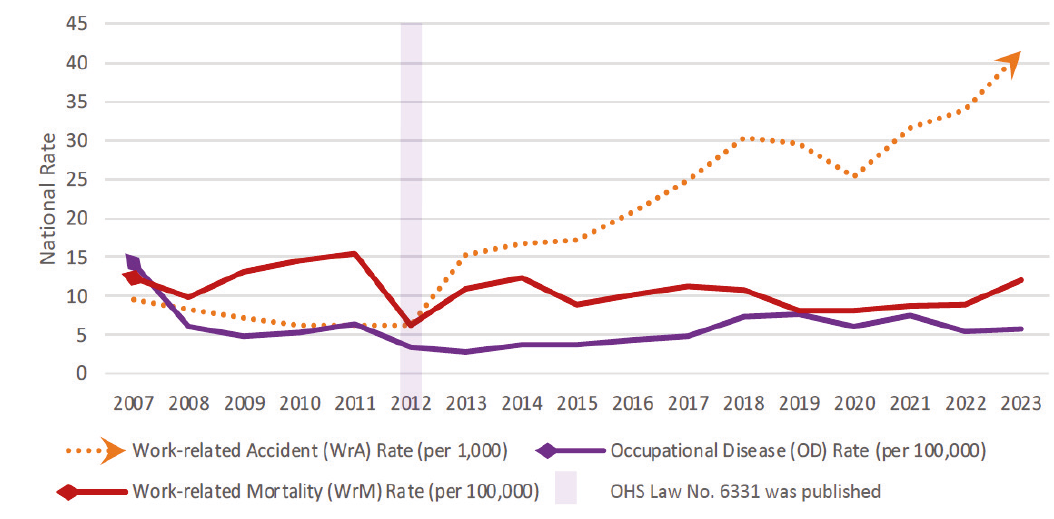
presents the annual numbers of WrA, OD, and WrM in Türkiye as raw values, offering a general overview of the country’s OHS status. However, this approach is limited in several respects, primarily because it does not account for changes in the number of workers over time. In other words, it cannot determine whether the observed increase in work-related incidents truly reflects a rise in occupational risk or simply results from workforce expansion. To overcome this limitation, it is necessary to examine rates rather than raw numbers, as shown in . By presenting these two perspectives together, we aimed to draw the reader’s attention to this crucial distinction.
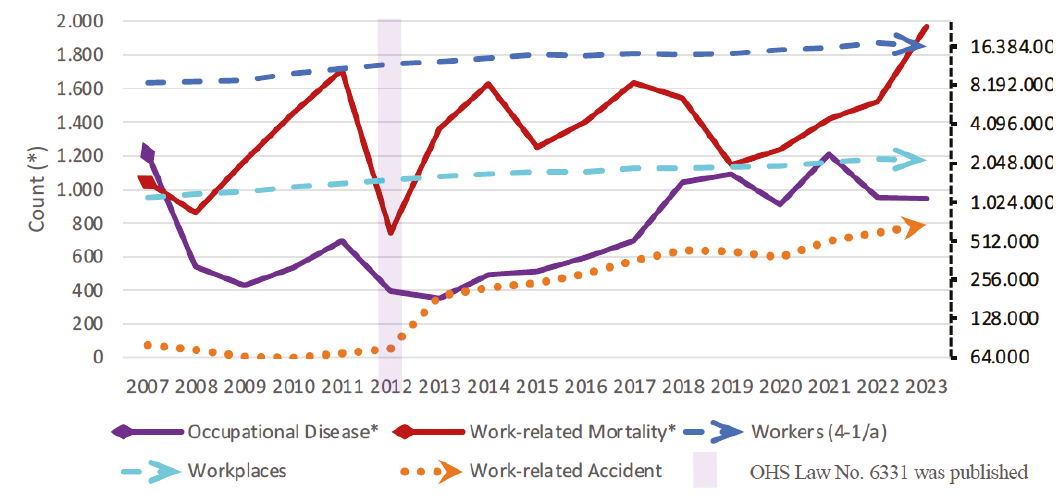
This figure illustrates the annual changes in the number of workers, workplaces, WrAs, ODs, and WrMs across Türkiye. It emphasizes trends at the national level and highlights the effective date of OHS Law No. 6331. This figure is particularly significant as it visualizes the five key work-related risk parameters in a single graph. Two Y-axes were used: parameters marked with an asterisk (*) correspond to the left axis, while those shown with dashed lines correspond to the right axis (logarithmic scale).
To further explore these national trends at the subnational level, , , visualize city-level standardized ratios and their spatial clustering. In , , , the analysis was extended to the city level. However, city-level analyses are inherently complex, as the number of workers varies substantially both across cities and over time. Therefore, a more advanced approach beyond was required, and standardization, the core analytical method of this study, was applied. Through this approach, city-level variations were mapped to enhance interpretability, regional clustering patterns were clearly visualized, and, to identify the cities most influenced by Law No. 6331, correlation analyses across years were conducted to reveal those with the most notable increases.
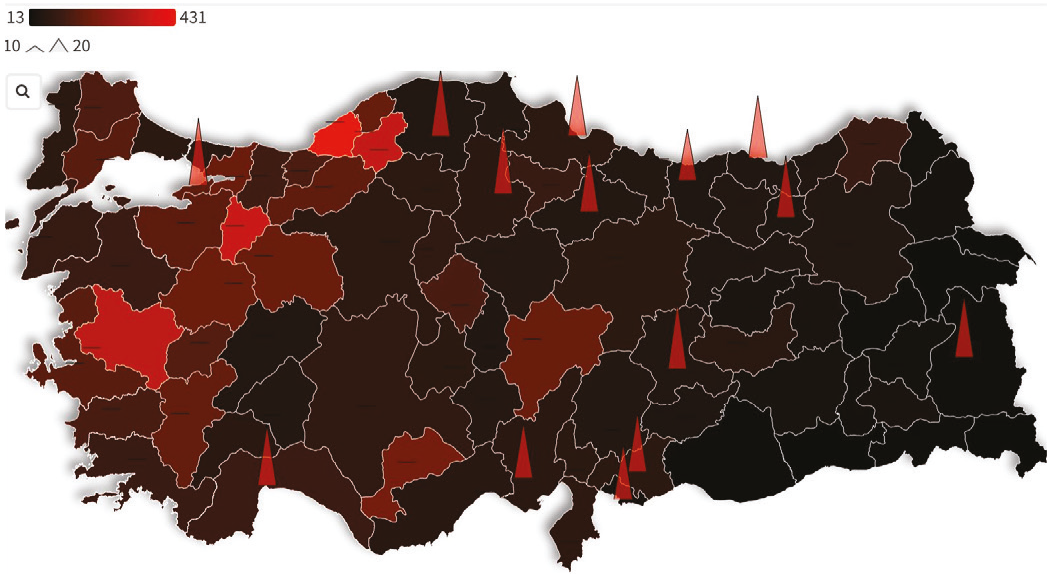
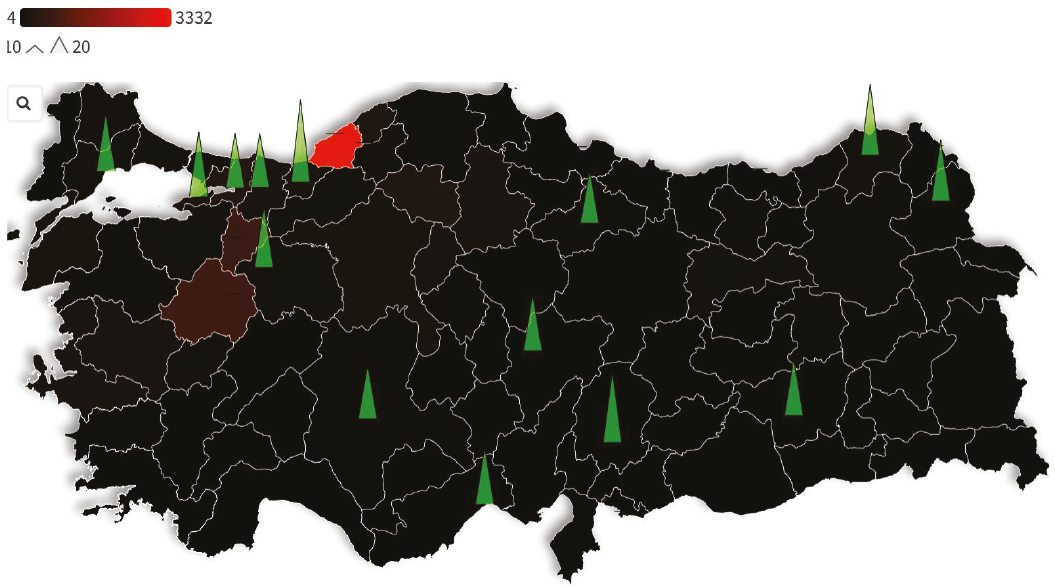
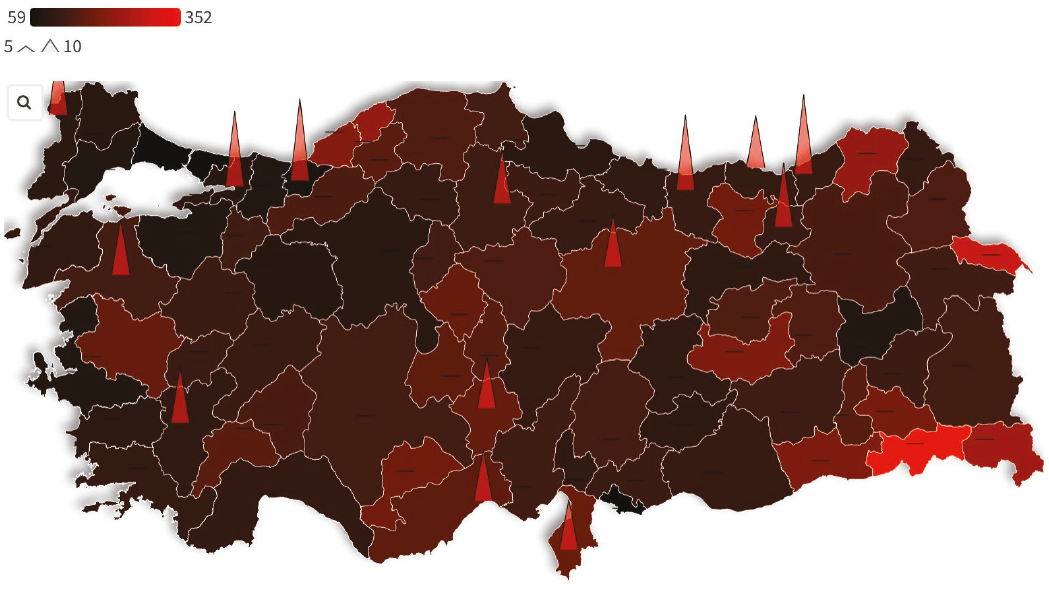
Figures 3–5 are heatmaps of Türkiye created to visualize the 17-year standardization analyses, illustrating the average standardized ratio percentages for 81 cities. The top left corner includes a scale for standardized incidence ratios (%) and a second scale showing percentage increases (upward arrows). These arrows highlight cities that exhibited an increasing trend following the implementation of Law No. 6331, effectively representing both the magnitude and direction of the correlation (Spearman). This approach was limited to the 14 cities with the highest ratios in order to focus attention.
Finally, we focused on the cities with the highest deviations from expected values, documenting their trajectories in , , .
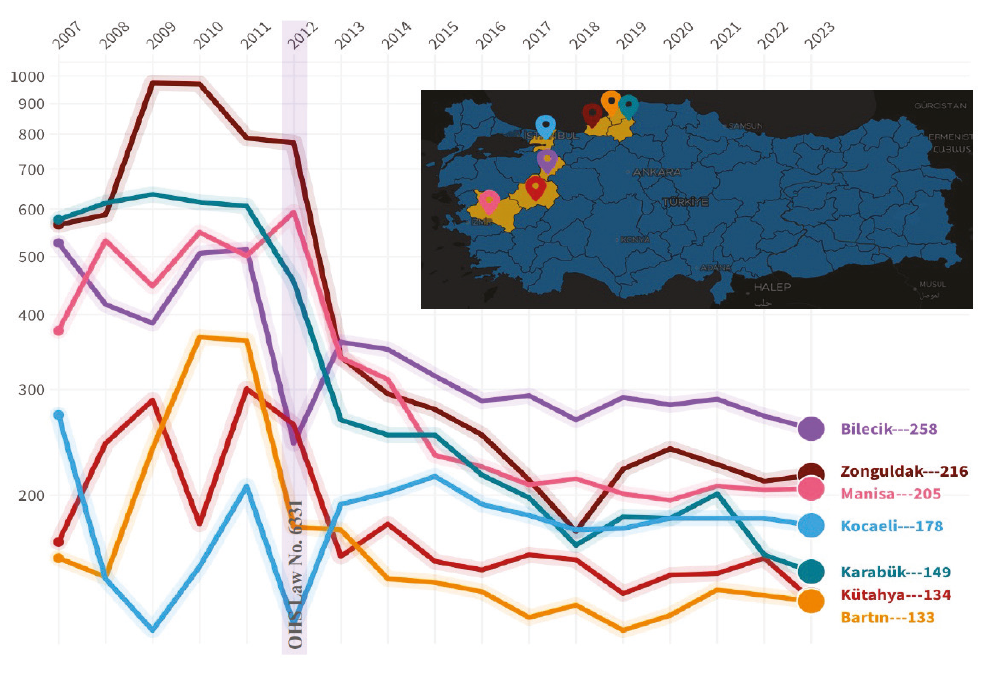
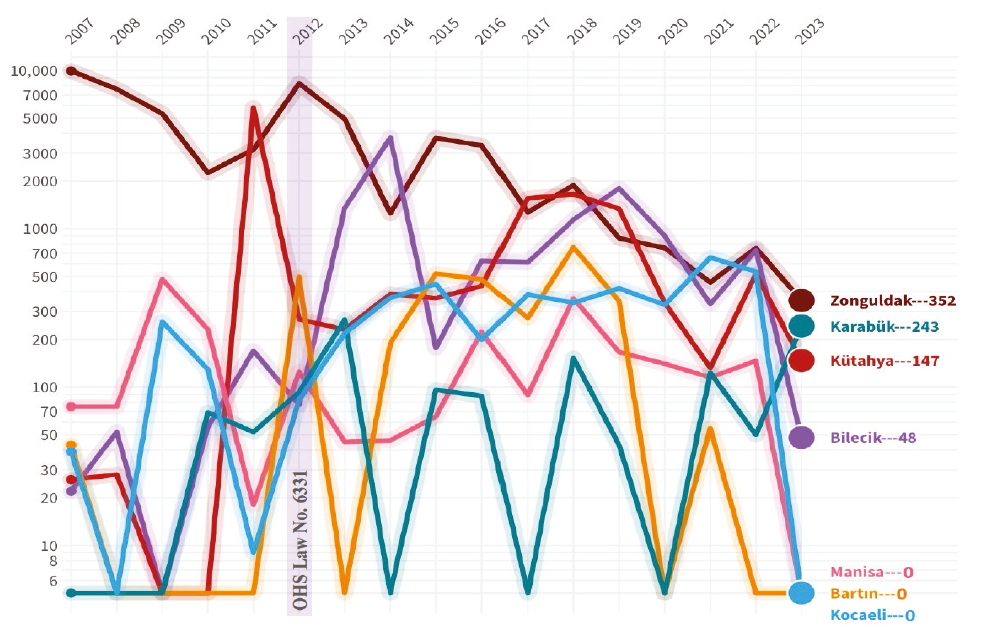
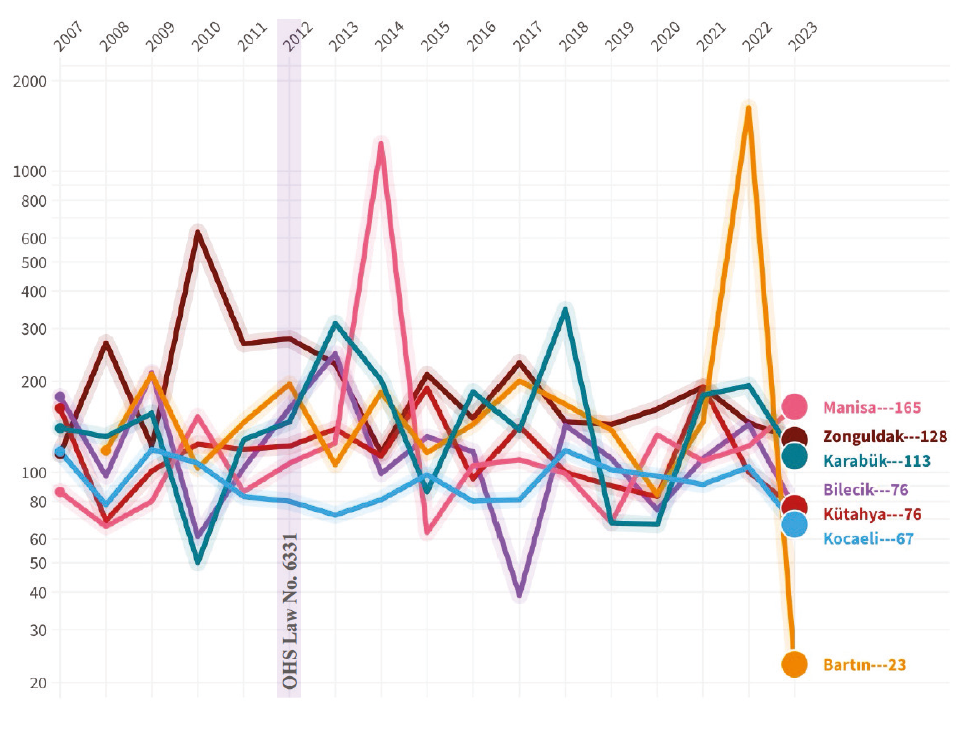
Figures 6–8 provide detailed analyses of the top seven cities with the highest standardized ratios of WrAs, ODs, and WrMs over the 17-year period, particularly in relation to the implementation of Law No. 6331. This approach allows a closer examination of specific cities while preserving the general-to-specific flow of the study. These figures use a logarithmic Y-axis while retaining original values, allowing both small and large ratios to be displayed for clearer comparison.
RESULTS
The results and figures were presented in a hierarchical structure progressing from general to specific to ensure clarity and ease of interpretation. The analyses were conducted at three levels—national, regional, and city—and within each level, WrA, OD, and WrM were evaluated separately.
National Level
Between 2007 and 2023, the number of 4-1/a compulsory insured workers in Türkiye nearly doubled (from 8.5 to 16.4 million), workplaces increased from 1.1 to 2.2 million, WrA cases rose from 80,602 to 681,401, OD diagnoses slightly declined from 1,208 to 945, and WrM cases increased from 1,043 to 1,966 ()
The number of WrAs had nearly tripled within a year following the implementation of Law No. 6331, and this increase continued steadily in the subsequent years. OD diagnoses exhibited a delayed response, demonstrating a consistent upward trend one year after the law’s enactment. This trend persisted until the onset of the COVID-19 pandemic, during which the ratios experienced fluctuations. Conversely, the number of WrM cases followed a fluctuating and irregular pattern; however, when averaged over time, it can be stated that they demonstrated a stable trajectory ().
Upon examining the National Incidence Rates (), which are more reliable than the numbers in , it was found that although no difference in the WrA trajectory could be detected that would change the interpretation, the increase observed in OD rates in was, in fact, minimal. Furthermore, while no significant difference in WrM rates was observed before and after the implementation of the law in , a notable decrease in these rates was recorded in the period following the law’s enactment, in . Overall, after the implementation of Law No. 6331, the reporting WrA and OD rates increased, while WrM rates gradually decreased over the study period.
Region Level
WrA reports were predominantly concentrated in the western half of the country. However, an analysis of the 14 cities showing the greatest post-law increase in sWrAs (range: 70%–96.4%) revealed a distinct clustering pattern in the Black Sea region ().
Regarding sODs, cities such as Zonguldak, Kütahya, and Bilecik consistently ranked among the highest. The 14 cities with the largest increase in OD diagnoses (range: 61.5%–96.1%) formed a marked concentration within the Marmara Region, reflecting region-specific differences in diagnostic activity ().
In contrast to ODs, elevated sWrM ratios were more geographically dispersed across Türkiye. Yet, when mapped, the 14 cities with the highest sWrM levels (range: 35.5%–58.2%) showed a clear tendency to cluster in the Eastern Black Sea region ().
City-Level
The top 7 cities with the highest overall ratios of sWrA, sOD, and sWrM were as follows: Zonguldak, Bilecik, Kütahya, Manisa, Bartın, Karabük, and Kocaeli, respectively. Notably, the top six cities consistently ranked at the forefront both before and after the implementation of Law No. 6331. When examined their locations on the map, it can be observed that they were aligned almost in a consecutive line on the north-south axis. In the cities at the top of the rankings, a noticeable decline pattern in sWrA was observed following the implementation of Law No. 6331. While irregularities and a wide range of fluctuations dominate the trends of sOD, a slight downward trend is evident in the maximum rates observed after the enactment of Law No. 6331. In contrast, sWrMs exhibit more frequent peaks and troughs, showing no discernible pattern associated with Law No. 6331 (, , ).
Work-Related Accidents
Before the implementation of Law No. 6331, sWrA reached as high as 900% in some cities; however, no city recorded a rate exceeding 500% in any subsequent period.
Specifically: sWrA ratios declined from 565% to 216% in Zonguldak, from 527% to 258% in Bilecik, and from 576% to 149% in Karabük. Similar downward trends were observed in Manisa (593% → 205%) and Bartın (367% → 133%) (, ).
Occupational Diseases
Prior to the implementation of Law No. 6331, some cities reported extremely high sOD values—up to 10,000% in Zonguldak in 2007. Following the enactment of the law, maximum ratios declined markedly to around 4,000% by 2016 and continued to decrease to approximately 1,000% between 2017 and 2019. After 2020, ratios above 500% became rare, except for isolated spikes such as 1,016 % in Samsun (2023).
Specifically: sOD ratios declined in Zonguldak (9,900% → 302%), in Bilecik (3,764% → 48%), and in Kütahya (5,788% → 147%), while Bartın’s rate decreased (519% → 0%) by 2023 (, ).
Work-Related Mortalities
In terms of WrMs, no consistent pattern associated with Law No. 6331 was observed, and the cities with the highest ratios varied considerably over the years. Unlike WrA and OD (, ), sWrM ratios displayed abrupt spikes rather than stable rankings. Cities showing recurrent peaks often exceeded 200–300%, whereas others such as Manisa (2014) and Bartın (2022) exhibited isolated, extreme surges. Specifically:
• Bartın showed an extraordinary increase in 2022 with a sWrM ratio of 1,622%, but this ratio dropped to 23% in 2023.
• Manisa experienced a notable spike in 2014, reaching a sWrM ratio of 1,232%.
• Şırnak had one of the highest sWrM ratios in 2015 at 1,080%, but this ratio decreased to 131% in 2023.
• Zonguldak had a high sWrM ratio of 626% in 2010, which dropped to 128% in 2023.
• Karabük reached a sWrM ratio of 312% in 2013, but this ratio fell to 113% in 2023.
These data indicate significant variations in sWrM ratios across cities and reveal that sudden spikes occurred in certain years (, ).
DISCUSSION
This study examined the effects of the OHS Law No. 6331, which came into force in Türkiye in 2013, through the standardization (s) of data related to WrAs, ODs, and WrM. Utilizing data published by the SSI for all available years, the analysis revealed a significant increase in sWrAs following the implementation of Law No. 6331, a slight increase in sOD ratios, and no significant change in sWrMs. The analyses also revealed that occupational health indicators were concentrated in certain regions; however, the highest standardized rates in these regions showed a declining trend over the years.
Beyond this, our study is the first to evaluate all these dimensions simultaneously and uniquely investigates the impact of the law on these data. To improve interpretability, our study used rates instead of raw counts and extended the analysis from national to city level through standardization, which allowed meaningful spatial comparison. Previously, Bayramlar et al. () illustrated these regional clusters based on a limited five-year period (2010–2015) and highlighted only the top ten cities with the highest standardized WrA, OD, and WrM ratios. İşsever et al. (), similarly, analyzed the 2008–2017 period from an occupational perspective and demonstrated that mining-intensive cities consistently exhibited high WrA and OD rates. Our study not only corroborates these earlier findings but also goes beyond them by analyzing a longer period (2007–2023) and providing a broader spatial perspective on regional clustering.
This broader temporal and spatial scope not only enhances the representativeness of our findings but also provides a stronger basis for cross-national comparison. Typically, even in countries with the most advanced OHS systems, it is estimated that there are reporting deficiencies (including WrM) (, ). To contextualize these deficiencies, we believe that the most effective assessment can be achieved through a comparison with German Statutory Accident Insurance statistics, a country with a similar population and a strong OHS system. In terms of WrAs, while 870,000 WrAs were reported in Germany in 2019 (), this number was below 430,000 in Türkiye (). The seemingly large gap observed here was considerably wider in previous years, particularly before 2013, when the absence of a comprehensive OHS framework led to severe underreporting. The Ministry became aware of this situation at the time and concluded that the major problem lay in the structural deficiencies of the national OHS system; accordingly, it enacted Law No. 6331 in 2013 to establish a comprehensive legal framework. As part of this legal framework, the forthcoming implementation of compulsory OHS services in 2025 for public institutions and low-risk workplaces with fewer than 50 workers is also expected to further strengthen this progress (). However, the continued discrepancy with Germany after 2013 also suggests that other major structural factors—such as informal employment, enforcement limitations, and the absence of a mature safety culture—have remained influential. This interpretation is supported by Çalış and Küçükali (), who argued that the lack of a well-established work safety culture in Türkiye contributes significantly to underreporting. Normally, the prevention of WrAs reflects an effective OHS system; however, due to the aforementioned reasons underlying Türkiye’s much lower WrA reporting rates compared to Germany, any increase in WrAs should be interpreted positively as an indication that the OHS system is beginning to take hold. This increase does not indicate a rise in actual incidents but rather reflects improved reporting practices and growing compliance with OHS regulations. In particular, regional increases in WrA reporting can be regarded as early evidence of a developing safety culture at the local level. Consistent with this interpretation, our study found that the provinces with the highest rise in standardized WrA were concentrated in the Black Sea region following the enactment of the law, suggesting that this area may have been among the first to internalize the emerging safety culture ().
Having examined WrA as indicators of reporting behavior and enforcement, it is also important to evaluate OD, which reflect the diagnostic and recognition capacity of the OHS system. Following the enactment of Law No. 6331, the expected increase in OD diagnoses began only in 2014, one year after the law’s enactment. This rise showed a steady upward trend until the fluctuations in the COVID-19 pandemic period (). As of 2022, the number of OD diagnoses in Türkiye has reached only around 1,000 (). Yuvka and Zorlu () also demonstrated that the number of OD diagnoses in Türkiye remained consistently low, highlighting a chronic underreporting problem (). Likewise, Ucuncu () showed that OD diagnosis rates in the SGK statistics were far below expectations. In contrast, during the same period, this number was 200,000 in Germany (, ). Nienhaus et al. () reported that the recognition of COVID-19 as an OD in Germany dramatically increased OD notifications. In contrast, the fact that COVID-19 was not recognized as an OD in Türkiye led to a marked difference between the two countries in this regard. Türkiye’s disparity in this regard exists not only with Germany but also with many other countries (). The seriousness of missed diagnoses in OD is clearly observed in the complex trends depicted in the relevant graphs and the differences in the heat map ( and ). Authorities acknowledge that the number of OD diagnoses in Türkiye remains quite low (, , ). Following the enactment of Law No. 6331, the cities experiencing the highest increase in OD diagnoses were concentrated in the Marmara region, the most developed area of Türkiye. This situation suggests that the infrastructure and awareness for identifying OD may be stronger in more industrialized and economically developed regions. As can be inferred from our interpretive perspective on these findings, a high reporting rate of OHS incidents in a region of Türkiye does not indicate poor workplace management; rather, it reflects the functionality of the system and the emergence of a developing safety culture, serving as a positive indicator.
Following the assessment of OD as an indicator of diagnostic capacity, we next evaluated WrM, which represents the final and most severe outcome in the spectrum of occupational health indicators. In Eurostat data for 2014, the rate of WrM per 100,000 workers was recorded as 1.27 in EU countries (), while in Türkiye, our study found this ratio to be 12.2 (). Contrary to the issues of underreporting in WrAs and ODs, the problem concerning WrMs lies in the very high rates themselves, which is understandably concerning. Even if some underreporting exists, it appears to be at much lower levels compared to WrAs and ODs, since a concrete and extremely serious outcome such as fatality is less likely to be overlooked. Since WrAs and ODs ultimately lead to WrM, fatalities represent the most tangible and predictable endpoint, whereas WrA and OD data are more dependent on reporting practices and therefore would be expected to be less reliable. Studies such as Hämäläinen et al. () have provided global estimates of both work accidents and fatal work-related diseases, demonstrating that fatalities constitute a substantial and measurable burden. While these analyses do not directly evaluate reporting reliability, the fact that fatal outcomes can be estimated globally indirectly supports our assumption that WrM data are less prone to underreporting compared to other occupational health indicators. en et al. () associated the ten-fold higher WrM rates in Türkiye with insufficient preventive measures and weak implementation of OHS legislation, and Ceylan () highlighted that fatal work accidents in Türkiye remain substantially higher than in EU countries. Moreover, Yuvka and Zorlu () and Ucuncu () reported that occupational incidents in Türkiye often result in more severe outcomes compared to other countries. Taken together, these findings reinforce our view that WrM data can be considered a gold standard when evaluating occupational health indicators in Türkiye. In our study, despite many developments following the enactment of Law No. 6331, the average WrM rate has not changed (). In our study, despite many developments following the enactment of Law No. 6331, the average WrM rate has remained unchanged, and these rates were found to be higher in the relatively less developed regions of Türkiye (). Overall, while legislative progress has provided a framework for improvement, the persistently high WrM rates highlight the need for stronger policy enforcement and region-specific preventive strategies to reduce fatal outcomes.
According to the ILO accident hierarchy pyramid, expected fatalities can typically be predicted based on the quantity and quality of WrA (). However, in the Turkish context, widespread underreporting of WrAs prevents such predictions from being reliable. When we examine the 14 cities with the highest sWrM ratios, we find that, with the exception of two cities, these locations had already reached sWrMs of 200-300 prior to major incidents ( and ). This indicates that these cities exhibited significant risks for major accidents and displayed clear warning signs even before such catastrophic events occurred. Consequently, in the case of Türkiye, this situation may suggest the potential for prevention of catastrophic events if focused interventions are implemented in these high-risk cities.
The consistency of sWrM data can also be observed in its clear reflection of well-known disasters (), such as the 2010 mining accident in Kilimli (Zonguldak), during which the city’s sWrM rose to 626%. Similarly, the 2014 Soma mining disaster in Manisa, which resulted in the fatalities of 301 workers, caused the city’s sWrM ratio to spike to 1,232%. Another notable incident was the 2014 Ermenek mining accident in Karaman, which also contributed to elevated sWrM. More recently, the 2022 Amasra mining disaster in Bartın led to an extraordinary increase in the city’s sWrM, reaching 1,622% ( and ).
The vast majority of major mining disasters in Türkiye have occurred in the western and northwestern regions (). However, despite this geographic concentration of large-scale accidents, sWrA reporting rates are markedly lower in the eastern provinces, whereas standardized sWrM rates are substantially higher ( and ). This apparent paradox can be explained by the fact that in the west, fatal events are concentrated in isolated industrial centers with intensive production activity, rather than forming a regional cluster. In contrast, in the east, limited industrial activity combined with severe underreporting and weaker preventive mechanisms leads to proportionally higher fatality rates. This pattern demonstrates that the inadequacy of Türkiye’s OHS system is even more pronounced in the eastern regions, where structural weaknesses manifest as persistently elevated mortality despite lower reported accident frequencies.
Generally, the cities with the highest ratios of sWrA, sOD, and sWrM included Zonguldak, Bilecik, Kütahya, Manisa, Bartın, Karabük, and Kocaeli (). Mining activities were predominant in all of these cities except for Kocaeli, which was an industrial center. Furthermore, these mining cities consistently ranked at the top both before and after the enactment of Law No. 6331. This is also evident in İssever’s et al. () research on industrial sectors. However, the pattern of decreasing peak values observed in previous years for sWrA and sOD was also evident in these cities over time ( and ). The underlying reason for this may be the improvements in OHS practices in other cities following the enactment of Law No. 6331 and the resulting increase in work-related incidence rates, which has led to the growth of the denominator in the standardization formula. No direct or clear impact of COVID-19 had been observed in these cities.
Study Limitations
This study has several limitations that should be acknowledged. While the SSI reports include all individuals under the 4-1/a category collectively, our analysis focused specifically on compulsory insured workers, who represent the main risk group for occupational incidents. This scope may have led to a slight overestimation in standardized rates but ensured a consistent and homogeneous comparison across years. Another limitation involves potential reporting and detection bias, particularly in WrA and OD data, which depend heavily on institutional awareness and diagnostic capacity. Intercity variations in economic structure and enforcement intensity may also have acted as uncontrolled confounders. Although standardization was applied to mitigate these effects, residual bias cannot be fully excluded. Furthermore, the study did not account for the severity of WrAs, which could have provided a more detailed understanding of the outcomes (). The lack of sector-specific data, international benchmarks, and workplace hazard profiles limits broader generalizability. Finally, region-specific academic research on occupational health indicators in Türkiye remains scarce, constraining the contextual interpretation of spatial disparities. Despite these limitations, the study offers a comprehensive national and regional overview that can guide future, more granular research and policy design.
CONCLUSION
This study provides valuable insight into Türkiye’s OHS system in the period preceding the planned 2025 expansion of Law No. 6331. Cities with the highest standardized ratios of workplace incidents—particularly WrAs, ODs, and WrMs—were concentrated in mining-intensive provinces such as Zonguldak, Bilecik, and Manisa. Marked regional disparities were identified: eastern provinces showed lower WrA reporting but higher WrM rates, indicating underreporting except in fatal cases. Although sODs remained low nationwide, a relative rise in the Marmara Region likely reflects improved infrastructure and awareness. The overall decline in extreme peak values suggests gradual progress in reporting and compliance. To strengthen the system, we recommend targeted OHS training in high-risk regions, enhanced OD diagnosis and reporting, and improved surveillance of WrM. Future national monitoring frameworks should integrate standardized indicators such as sWrA, sOD, and sWrM to enable comparability, data-driven evaluation, and early detection of regional disparities. Region-specific research should be encouraged to guide evidence-based interventions.
Footnotes
Ethics
Ethics Committee Approval: Ethical approval was not required, as the study utilized publicly available, anonymized data in compliance with the Declaration of Helsinki.
Informed Consent: Written informed consent was obtained from all participants or their legal representatives and is available from the corresponding author upon reasonable request.
Authorship Contributions
Surgical and Medical Practices: O.F.B., H.İ., Concept: O.F.B., H.İ., Design: O.F.B., H.İ., Data Collection or Processing: O.F.B., Analysis or Interpretation: O.F.B., Literature Search: O.F.B., Writing: O.F.B.
Conflict of Interest: No conflict of interest was declared by the authors.
Financial Disclosure: The authors have no relevant affiliations or financial involvement with any organization or entity with a financial interest in or financial conflict with the subject matter or materials discussed in the manuscript. This includes employment, consultancies, honoraria, stock ownership or options, expert testimony, grants or patents received or pending, or royalties. No financial, institutional, or in-kind support was received from Ziraat Bank. No writing assistance was utilized in the production of this manuscript.
References
Social Insurance and General Health Insurance Law (Law No. 5510) (2006). [cited: 30.01.2025]. Available from: https://www.mevzuat.gov.tr/mevzuat?MevzuatNo=5510&MevzuatTur=1&MevzuatTertip=5.
Presidency of the Republic of Türkiye Social Security Institution (SSI). Annual statistics reports. Social Security Institution (SSI); 2007, [cited: 26.01.2025]. Available from: https://www.sgk.gov.tr/Istatistik/Yillik/fcd5e59b-6af9-4d90-a451-ee7500eb1cb4/
International Labour Organization (ILO). Decent work – safe work: global report on work-related accidents and illnesses. Geneva, Switzerland; International Labour Organization; 2009. Available from: https://www.ilo.org/sites/default/files/wcmsp5/groups/public/@ed_norm/@relconf/documents/meetingdocument/wcms_103485.pdf
Presidency of the Republic of Türkiye Ministry of Labour and Social Security. Occupational diseases, page 12. Ankara, Türkiye; 2013, [cited: 26.01.2025]. Available from: https://www.csgb.gov.tr/Media/fgwlc5ol/meslekhastaliklari.pdf
Occupational health and safety law (Law No. 6331), (2012). [cited: 30.01.2025]. Available from: https://www.mevzuat.gov.tr/mevzuat?MevzuatNo=6331&MevzuatTur=1&MevzuatTertip=5.
Yuvka Ş, Zorlu E. The importance of statistics on occupational accidents and occupational diseases in the world and in Türkiye between 2000–2020. Journal of Scientific Reports-A. 2023; 53: 74–96.
Ucuncu K. 2014 SGK Analysis of work accidents and occupational diseases statistics. Ankara, Türkiye; Social Security Institution (SSI); 2014. Available from: http://www.isteguvenlik.tc/2014%20SGK%20Analiz.pdf
Presidency of the Republic of Türkiye Ministry of Labour and Social Security Directorate General of Occupational Health and Safety. Policy and Strategy. n.d., [cited: 26.01.2025]. Available from: https://www.csgb.gov.tr/isggm/ısg-hizmetleri/politika-ve-strateji/
Bayramlar OF, Ezirmik E, İşsever H, Bayramlar Z. Standardization of the numbers of work accidents, occupational diseases and mortality rates according to social security institution’s 2010–2015 years data based upon cities. J Ist Faculty Med. 2019; 82: 29–39.
Law on amendments to certain laws and decrees with the force of law (Law No. 7491), Article 71, (2013). [cited: 30.01.2025]. Available from: https://www.resmigazete.gov.tr/eskiler/2023/12/20231228-10.htm.
Günler SH. People who are deemed insured in accordance with law number 5510, Article 4/1-a. İstanbul: İstanbul University; 2020.
Tekin B. SGK istatistikleri: is kazaları ve ölümlerin azalmadığını söylüyor. evrensel; 2023, [cited: 26.07.2025]. Available from: https://www.evrensel.net/haber/498652/sgk-istatistikleri-is-kazalari-ve-olumlerin-azalmadigini-soyluyor
Paneth N. Introduction to epidemiology (EPI 810). Ankara, Türkiye; Ministry of Health, Republic of Türkiye; n.d., [cited: 26.01.2025]. Available from: https://ekutuphane.saglik.gov.tr/Home/GetDocument/411
Hayran O. Sağlık bilimlerinde araştırma ve istatistik yöntemler. 3.baskı. İstanbul, Türkiye: Nobel Kitapevi; 2012.
Centers for Disease Control and Prevention (CDC). Principles of epidemiology in public health practice: an introduction to applied epidemiology and biostatistics. 3rd ed. Atlanta (GA): U.S. Department of Health and Human Services; 2006. Available from: https://stacks.cdc.gov/view/cdc/6914
Lwanga SK, Tye CY, Ayeni O. Teaching Health Statistics: Lesson and Seminar Outlines. 2nd ed. Geneva, Italy: World Health Organization; 1999.
Akbulut IS, Sabuncu H. Research methods in health sciences: principles and applications of epidemiology. 1st ed. İstanbul: Sistem Yayıncılık; 1993. Available from: https://www.nadirkitap.com/saglik-bilimlerinde-arastirma-yontemi-epidemiyoloji-prensip-ve-uygulamalar-prof-dr-turhan-akbulut-kitap37615033.html?srsltid=AfmBOoqLUHibjEZFLKg9Zt4N12CANMlagqedRAx UyMqPGVK4aVblKCT1
İşsever H, Ezirmik E, Öztan G, İşsever T. Standardization of work accidents and occupational diseases indicators of social security institution between 2008-2017 years. J Ist Faculty Med. 2020; 83: 434-45.
Turkay M, Yildiz AN, Issever H. Meslek hastalıkları işle ilgili hastalıklar. In: Yildiz AN, Sandal A, editors. İş sağlığı ve güvenliği meslek hastalıkları. Ankara: Hacettepe Üniversitesi Yayınları; 2020. ISBN: 978-975-491-506-8. Available from: https://openaccess.hacettepe.edu.tr/items/4cc3ae8a-9c5a-472f-8f33-813dc8235d8d
Hämäläinen P, Takala J, Kiat TB. Global estimates of occupational accidents and work-related illnesses 2017. Institute WSaH, editor. Finland: Ministry of Social Affairs and Health; 2017.
Deutsche Gesetzliche Unfallversicherung (DGUV). Statistics on accidents at work and occupational diseases 2019. 2019, [cited: 26.01.2025]. Available from: https://publikationen.dguv.de/widgets/pdf/download/article/3922
Çalış S, Küçükali UF. The work safety culture as a subculture: the structure of work safety culture in Türkiye. Procedia Computer Science. 2019; 158: 546-51.
Nienhaus A, Stranzinger J, Kozak A. COVID-19 as an occupational disease-temporal trends in the number and severity of claims in Germany. Int J Environ Res Public Health. 2023; 20: 1182.
Keçeci S. examination of occupational health and safety strategies and policies in turkey and some european union countries. OHS Academy. 2020; 3: 53–60.
Eurostat. Accidents at work statistics. n.d., [cited: 26.01.2025]. Available from: https://ec.europa.eu/eurostat/statistics-explained/index.php?title=Accidents_at_work_statistics
Hämäläinen P, Leena Saarela K, Takala J. Global trend according to estimated number of occupational accidents and fatal work-related diseases at region and country level. J Safety Res. 2009; 40: 125–39.
Şen M, Dursun S, Murat G. Work Accidents in Turkey: An evaluation in the context of the european union countries. OPUS Int J Soc Res. 2018; 9: 1167–90.
Ceylan H. Fatal occupational accidents in Türkiye. OHS Academic. 2021; 3: 1–13.
Takala J. Introductory report: decent work – safe work. XVIth World Congress on Safety and Health at Work; 27 May 2002; Vienna, Austria: International Labour Office (ILO); 2002.
Vikipedi. Türkiye’deki madencilik kazaları listesi. 2025, [cited: 30.01.2025]. Available from: https://tr.wikipedia.org/wiki/Türkiye%27deki_madencilik_kazaları_listesi
Koçali K. Standardization of between 2012–2020 years work accidents indicators of social security institution. Journal of Academic Approaches. 2021; 12: 302–27.
Supplementary Materials
Supplementary Tables 1
Download